Careers Aboard Commercial Ships
The commercial shipping industry moves about 80–90% of global trade. It includes container ships, bulk carriers, tankers, and specialized vessels transporting everything from consumer goods to energy resources. Commercial qualifications extend into cruise ships, passenger ships, offshore oil and gas support vessels and more.
Bridges Over Water began within the yachting sector, but we don't want to limit our recipients to one side of the maritime world. We are working to develop partnerships within the commercial side, and can set up recipients with industry mentors in order to embark on this exciting path.
Voyage Ahead
Deck Department
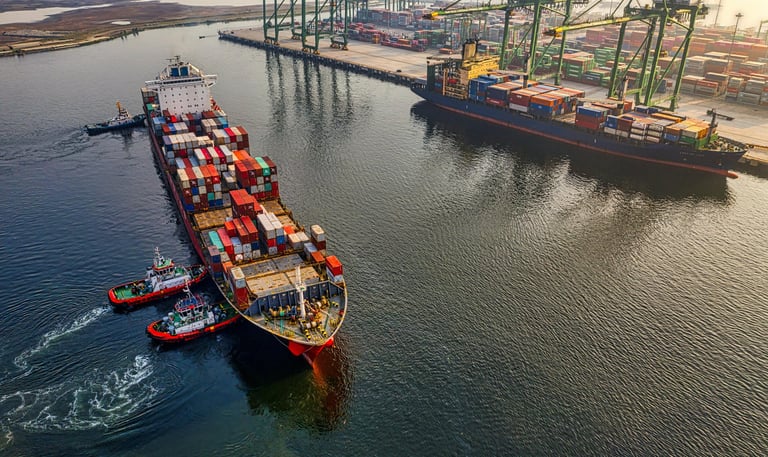
The Deck Department is responsible for safety, navigation and general operation of the ship. Entry level positions begin at Ordinary Seamen, responsible for cleaning, maintenance, and assisting with cargo handling. After 12 months sea service, an OS can progress to Able Seaman, who will be tasked with taking on more complex tasks.
After 12 months as AB, seafarers may begin Officer of the Watch Training, studying navigation, stability, metorology and maritime law, to obtain the rank of Third Officer, and rank as a junior navigating officer. With 12 months sea service and education in Electronic Chart Display, Bridge Resource Management, Navigation and Safety, the next role is Second Officer.
With more sea time, and advanced education, seafarers can qualify for Chief Officer and Captain roles, becoming responsible for the navigation of these massive ships.


Steward and Catering


The Engineering Department is vital to the ship's operations, ensuring that all mechanical and electrical systems function correctly. The entry-level position in this department is the Oiler or Motorman, responsible for lubricating machinery, checking equipment, and assisting engineers with routine maintenance. To qualify for this position, candidates must complete a Basic Safety Training course and an Engine Room Watchkeeping course, which includes training in basic engine mechanics and safety procedures.
With experience, Oilers can progress to the role of Fourth Engineer. This position involves handling specific tasks such as maintaining the ship's fuel, lubrication, and water systems, as well as assisting with the general upkeep of the engine room. To qualify, candidates need to have at least 12 months of sea service as an Oiler and complete an engineering training program that covers advanced mechanical and electrical systems
To progress to Third, Second and Chief Engineer, each requires additional seatime, and additional education, and more responsibility. Engineering is both complex, and immensely rewarding.
The entry-level position is typically the Steward, responsible for assisting with food preparation, cleaning, and maintaining the living quarters. To qualify, candidates must complete Basic Safety Training and a Food Safety course.
With experience, a Steward can progress to the role of Chief Cook. The Chief Cook manages meal preparation, menu planning, food supplies, and kitchen staff. To become a Chief Cook, candidates must have experience as a Steward, complete an advanced culinary training program, and obtain certification in shipboard catering. The Chief Cook is also responsible for ensuring compliance with international food safety standards and dietary requirements, making the role both managerial and hands-on in nature.
As with other seafaring positions, the pathway to advancement in the Catering Department involves gaining practical experience, completing relevant training courses, and obtaining necessary certifications. A Chief Cook can further advance by taking specialized courses in hospitality management, which can open up opportunities to work on larger vessels, such as luxury cruise ships, where the responsibilities and standards are more demanding
Career Paths in Commercial Shipping
Interested in an exciting career, working as crew aboard some of the biggest vessels on the planet?
Engineering
Contact
Reach out for questions or support
Mobile: +1(340)725-0833
WnatsApp: +1(268)785-2983
© 2026. All rights reserved.